

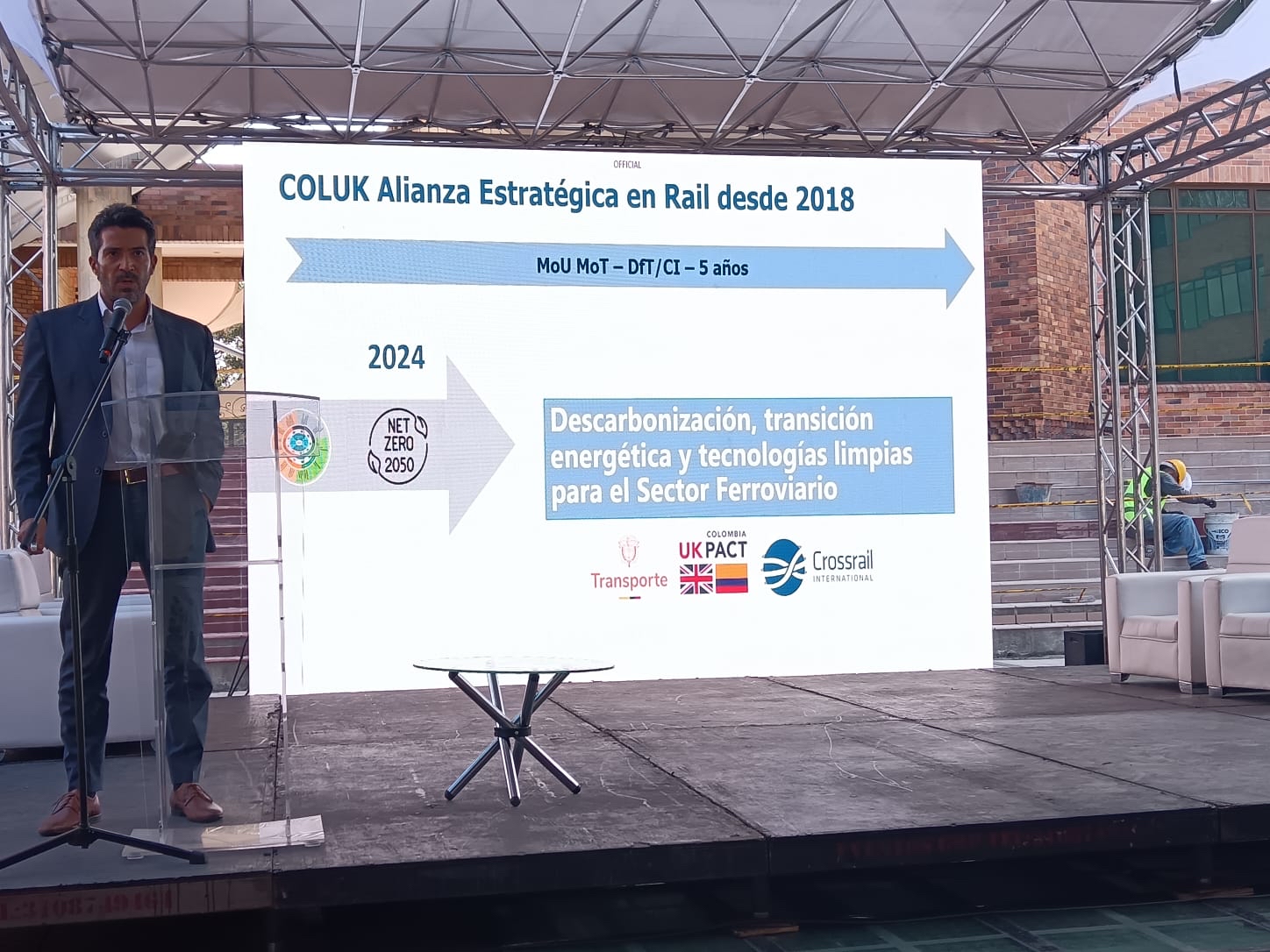
Last week, Felipe Castro Arenas presented at “Transporte rumbo a la COP30” (Transport on the Road to COP30 Brazil), an event organised by the Ministry of Transport of Colombia to explore how the transport sector can contribute to achieving national and global climate goals.
The event brought together government officials, international partners, and industry experts to discuss the pathways to decarbonisation, the adoption of clean technologies, and the governance frameworks needed to deliver a more sustainable transport system.
Drawing on Crossrail International’s collaboration with UK PACT (Partnering for Accelerated Climate Transitions), Felipe shared global best practices and practical examples of how international standards such as PAS 2080 and early engagement with the supply chain can help reduce carbon emissions across all stages of project delivery; from design through to operation.
He also highlighted Colombia’s strategic opportunity to become a regional leader in low-carbon transport, positioning rail reactivation as a platform for innovation, investment, and green job creation. By embedding sustainability into infrastructure planning and delivery, Colombia can not only meet its climate targets but also stimulate long-term economic growth.
The session underscored how strategic collaboration and knowledge exchange can accelerate the transition towards a more sustainable, inclusive, and low-carbon transport future; both in Colombia and across Latin America.
At Crossrail International, we are proud to collaborate with partners across the region to advance sustainable rail, support effective governance, and share the UK’s experience in delivering cleaner, more resilient transport systems. Through continued partnerships and technical cooperation, we aim to help governments and industry deliver projects that contribute to a greener and more connected future.